
Falafel El Assad
Eighteen months of collaboration, a complete Unity game, and a free demo designed to introduce players to the experience.
Carthage Studio developed the game in Unity, working with art and audio supplied by Stereo Studio. GLG is the publisher.

Inside the game
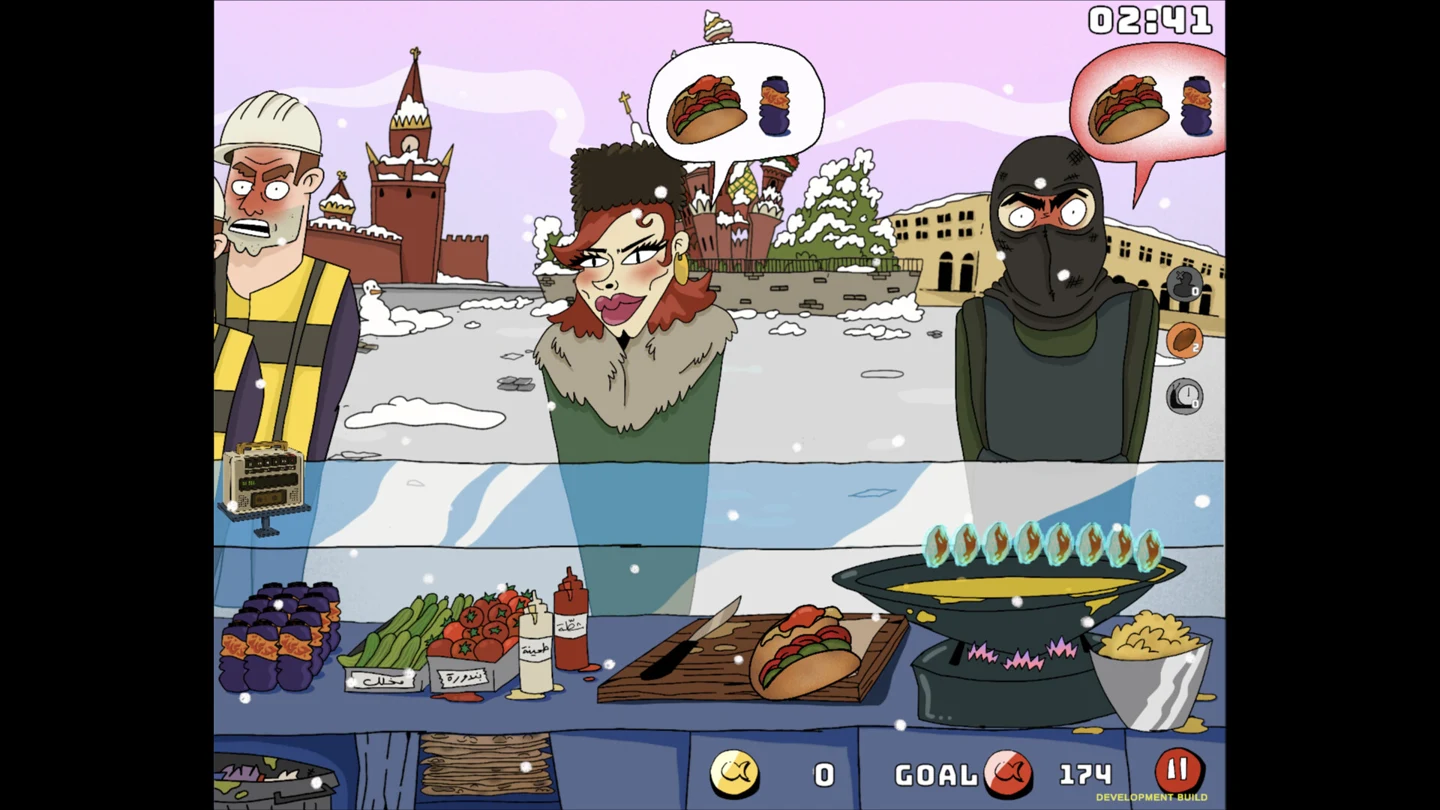
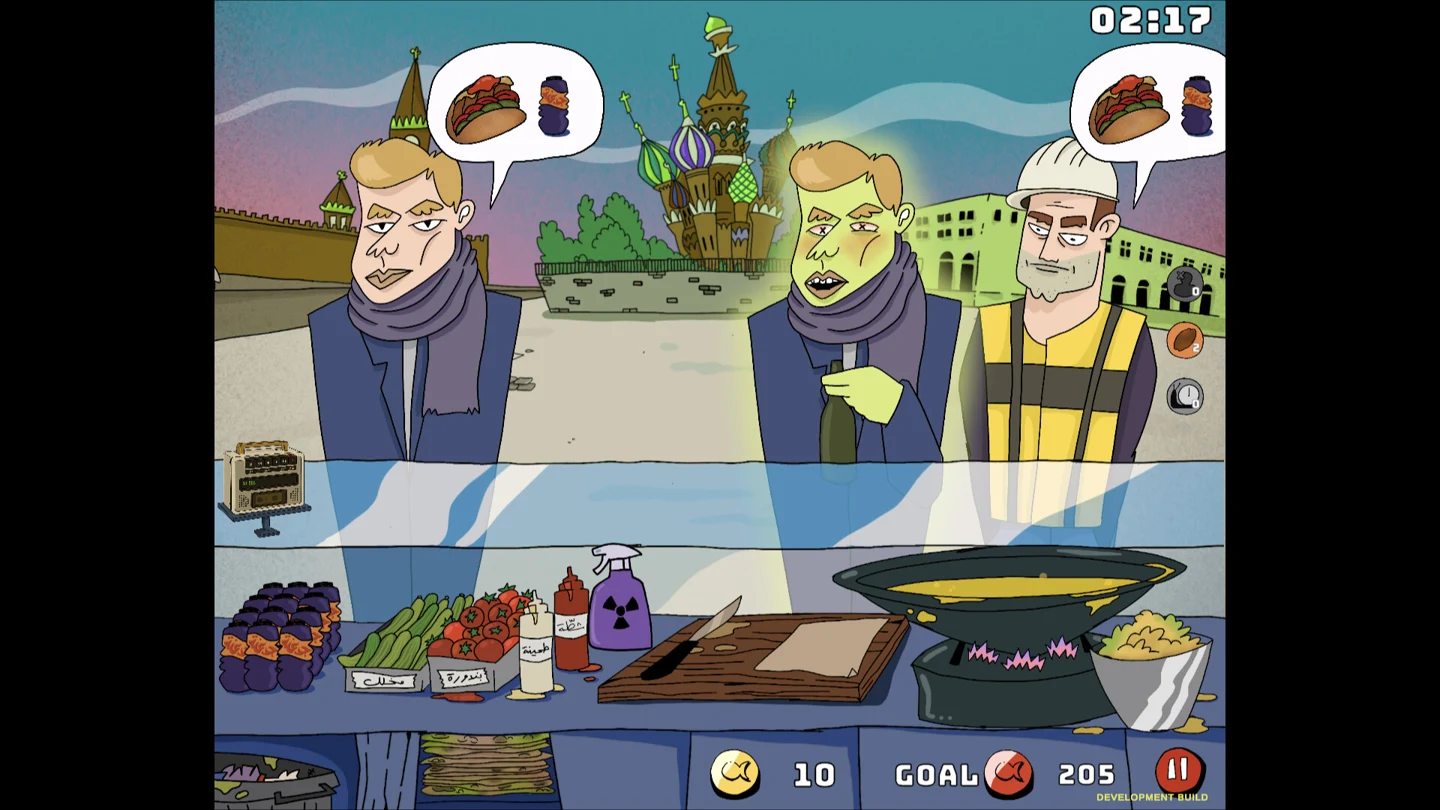
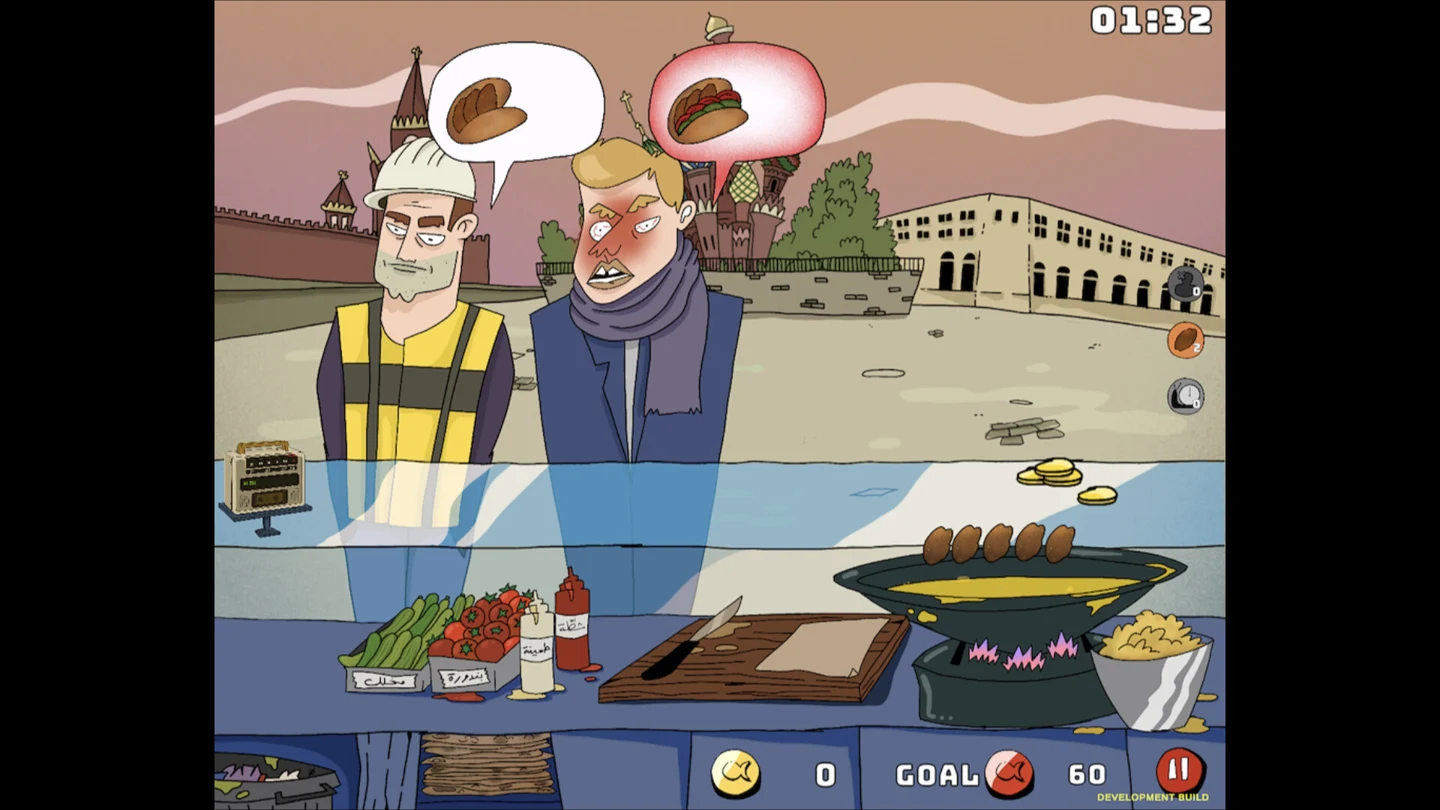
An idea that brought us together
The project began with an idea proposed by Ronnie Karkar, owner of Stereo Studio. An initial call brought us together with the artist behind the project to discuss the game and plan the collaboration.
Stereo supplied the artwork and audio, and the Carthage team prepared the first playable concept in Unity. Over approximately eighteen months, that collaboration grew into a complete game.
Building the game and the working relationship
Our first collaboration taught us that the development process needed as much attention as the game itself. Finding a consistent way to share revisions, discuss decisions, and turn feedback into development tasks took time and contributed to delays.
As we established a clearer working rhythm, the team could move toward completing the game with a shared understanding of what needed to happen next. Stereo provided revisions, while the artist played a central role in testing and giving the final creative feedback.
Making the economy work
The game economy required careful discussion: how players earned money, how quickly income grew, and how the balance supported the intended experience.
Through repeated calls with Ronnie, we explained the systems, proposed alternatives, and worked toward an economy that rewarded progress without making income grow too quickly. Those discussions helped translate a creative intention into decisions the development team could implement.
Giving UX a clearer place in development
We initially underestimated the importance of UX design. Bringing more structure to that work later became part of completing the game, and an important lesson from the project.
For future collaborations, we want gameplay, user experience, economy, and audience to be defined earlier. Clear requirements help skilled developers focus their effort and give everyone a stronger basis for reviewing the result.
A complete game, introduced through a demo
With full-game development completed, Carthage proposed introducing the experience through a free demo with a limited selection of levels.
The goal is to give players a meaningful first experience, encourage Steam wishlists, and build interest ahead of the full release. The partners’ existing social audiences offer another way to bring players to the demo.
This is the strategy behind the demo. Wishlist growth and full-release performance will be outcomes to assess as the campaign progresses.
What we delivered—and what we learned
The collaboration brought the full Unity game and its limited-level marketing demo to completion. It also gave Carthage Studio experience coordinating development with external art, audio, revisions, and playtesting.
Our strongest lesson was the value of planning: agree on the intended experience, responsibilities, economy, UX, and development tasks early. A shared plan gives the team a clearer path from an initial concept to a finished game.
Watch streamers play
Looking for a Unity development partner?
Tell us about your game, your creative team, and the development support you need.