
Moto Rush VR
An original first-person motorcycle game from Carthage Studio, built around the tension of riding through urban traffic.
Free Meta Quest demo target: November 30, 2026.
Subject to final testing and store approval.
The road to Moto Rush VR
We started with a simple idea: in VR, the most exciting part of riding through traffic might be the moment you spot a gap and decide whether to take it.
It started with the feeling
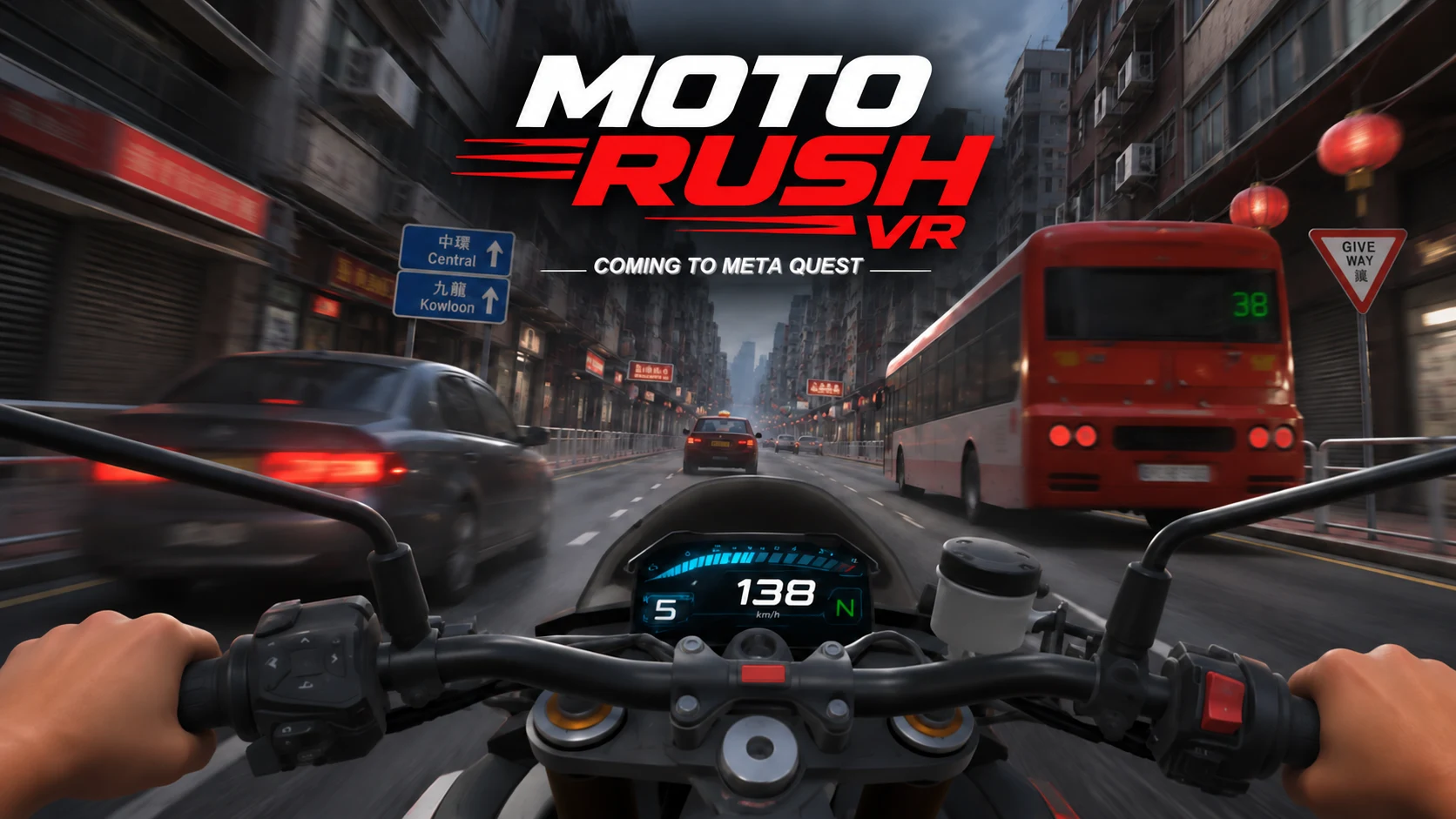
For Moto Rush VR, we did not want the road to feel like a backdrop. We wanted the traffic to be the challenge: a bus filling your view, a narrow opening between cars, and a split-second decision that might save your run—or end it.
That idea became an original first-person motorcycle game from Carthage Studio. A dense, Hong Kong-inspired city gives the experience its setting, but the real focus is simpler: the tension and satisfaction of making it through one more stretch of road.
Making the ride work in VR
A motorcycle game is one thing. Making someone feel comfortable and in control of a motorcycle inside a headset is another. As we built the experience, small interactions became big design questions: Where should the rider sit? How should steering feel? How do we teach the controls without taking players out of the moment?
We gave players a way to adjust their riding position before accelerating. They can ride with joystick controls or interact with the handlebars, and they can change their choice later in Settings. The tutorial walks them into the experience before the traffic becomes the real test.
Sound became part of the design, too. The engine, wind, nearby vehicles, and busy street atmosphere all help communicate speed, even when the player is sitting still in the real world.
Building a city the headset can handle
A lively urban road needs cars, buses, storefronts, buildings, and enough movement to feel unpredictable. Standalone VR has a different requirement: every addition has to earn its place in the performance budget.
We have been building Moto Rush VR in Unity using the Universal Render Pipeline, with optimized vehicle versions, level-of-detail systems, and a city assembled for moving traffic. The challenge has been balancing a believable setting with the responsiveness and comfort that VR riding requires.
The environment is still evolving. New city blocks are being integrated, visuals continue to improve, and the priority remains the same: the ride must feel good before every distant detail looks perfect.
Three rides to discover the rush
The first public demo is deliberately focused. Players begin with a guided tutorial, then get three chances to make their way through moving traffic. They learn to accelerate, steer, brake, hold their speed, and earn near-miss bonuses—then discover how long they can survive.
We use the demo to introduce the larger game without overwhelming players with every feature we have planned. At the end, they can opt in to hear about future releases and a planned exclusive Founder’s Edition motorcycle reward.
Free Meta Quest demo target: November 30, 2026—subject to final testing and store approval.
The next stretch of road
The demo is a beginning, not a finished destination. We are working toward a paid Early Access version with unlimited riding, more motorcycles, additional game modes, and a garage experience. Customization, upgrades, and further environmental variety are part of the broader plan. These are planned features; a paid Early Access release date has not been announced.
As an indie studio, we want the next decisions to come from real players as much as from our own roadmap. Which moments make them lean into the ride? Where does the challenge feel unfair? What would make them come back for one more run?
That is why releasing the demo matters to us. We have spent months building and refining the experience. Now we want to see what happens when other riders take the handlebars.
The road ahead is still ours to build. The first stretch is almost yours to ride.
Follow Moto Rush VRBuilding something in VR?
Tell us what you want players to do and which headsets you’re targeting.